JahWorks.org banner
home
music
travel
community
contribute
advertise
about us
sitemap
Main Interview Page

A Culture of Intolerance: Insights on the Chi Chi Man Craze and Jamaican Gender Relations with Julius Powell of JFLAG

Interview by Gregory Stephens    
Spring 2002
   
DJ-RJ and Gregory Stephen's Radio show on Equal Rights and Justice features clips from the Julius Powell Interview. There are different Quick Clips in MP3 format on each page of this interview, or you can listen to the whole show.


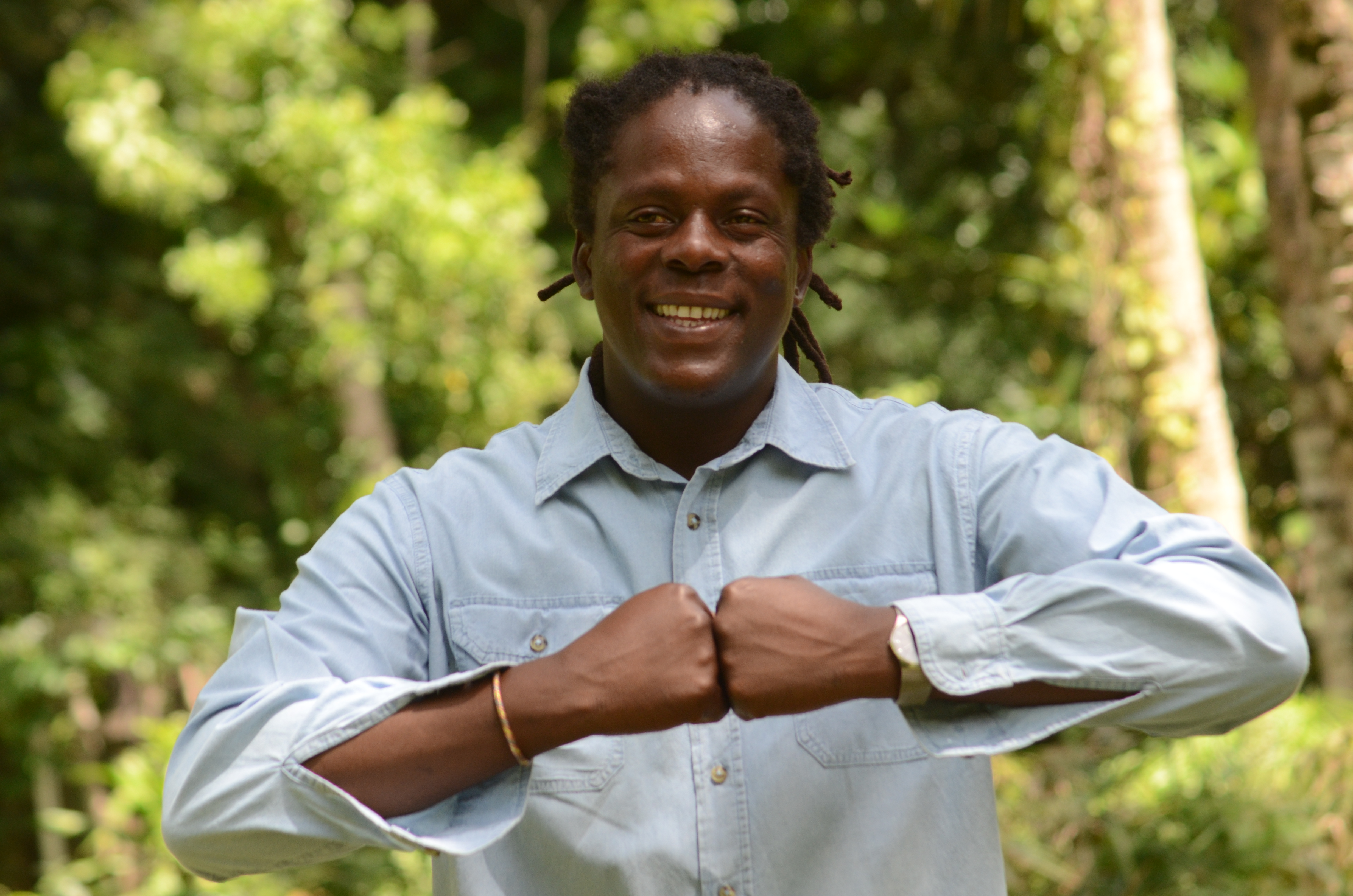
julius powellAnti-homosexual rhetoric and violence has reached crisis proportions in Jamaica. Anti-gay lyrics are growing ever more virulent in dancehall music, and some Jamaicans are acting out the murderous rage expressed in these lyrics, as they have acted out the fire burn mentality. This is really an international crisis: hardly anyone in Jamaica’s intensely homophobic culture is even willing to say directly that this is a problem, and few of those in the international audience who support the music seem to realize that these lyrics have real-life consequences. This was a point driven home with dramatic simplicity by Julius Powell, a spokesperson for the civil rights group JFLAG, Jamaicans for Lesbians, All-Sexuals and Gays. "This music sells in the United States, but it kills in Jamaica," he emphasized.

I interviewed Julius on December 3, 2001, from his temporary home in Brattleboro, Vermont, where he is pursuing a Masters in Sustainable Development at the School for International Training. Numerous audio segments of the interview were included on a radio special on the theme "Expanding the Culture of Equal Rights and Justice." I aired this show with DJ RJ on KAZI-Austin February 12 and with Scottie McDonald on KTRU-Houston February 13.

Julius Powell is a native of Manchester, near Kingston. He has a B.S. in Management Studies from the University of the West Indies. His multi-faceted background includes a stint as a Bank Internal Auditor for the National Export Import Bank of Jamaica, and experience in developing non-governmental organizations (NGO’s). As chairperson of the Finance and Enterprise Committee of JFLAG, he has given special emphasis to nurturing alliances: across class lines in Jamaica, with other gay rights and civil rights organizations throughout the Caribbean and Latin America, and more broadly, with a variety of human rights groups in the United States and Europe. In the following transcript, Julius provides a ground-level view of how homophobia is experienced in Jamaica. He also draws explicit links between Jamaican machismo, repressive attitudes towards the place of women, and virulent hatred of homosexuals.

--------------------------------

Gregory Stephens: Some of the anti-gay lyrics coming out of Jamaica are disturbing. There one by Beenie Man called "Damn" where he says, "I’m dreaming of a new Jamaica, come to execute all the gays." Then "Chi Chi Man," the biggest tune on the island over the last year: "Rat tat tat every Chi Chi Man dem hafi get flat/ Mi an my niggas ago mek chi chi man fi dead an dats a fact." How do you react to that?

Julius Powell: The songs incite violence and hatred towards gay people and peoples whose sexuality differs from the norm. We have had at least two deaths this year, so far. One was a student of an all male High School in Kingston. We have had a number of persons who have been arbitrarily beaten because of the society’s perception that they are gay. In January this year, we also had another incident on the Northern Caribbean University campus in Mandeville where four students were brutally beaten at around 4AM. The door to their dorm was kicked off, electricity and telephone communications were cut to the dorm and other students beat them with planks. These planks had nails and they were mercilessly beaten.

This whole idea of Jamaica being a plural society is a farce. We do not believe it is as plural as mainstream society makes it out to be. Because "Chi Chi Man" is just one of a number of songs that are played continuously on the air and television in Jamaica. There is Elephant Man, Spragga Benz to name a few. Spragga Benz two weeks ago issued a statement condemning gays and [emphasized] that his anti-gay message will continue to go out. For us it raises concerns because not everyone in the society is in a privileged position. The root cause of this is Jamaica’s "cultural intolerance" towards gays and homosexuals. This manifest itself in the music.

GS: I have a report that there was an incident in 1997 where 17 inmates who were presumed homosexual were killed. And in some cases beheaded, and had their limbs cut off. Is that true?

JP: Yes, the prison riots of August 1997 lasted a few days. What started the riot was the comment by the Commissioner of Prisons at the time (Col. Prescod) who merely suggested that condoms be distributed in the prisons. The concern was that there was an increase in the reported Sexually Transmitted Infections in the prisons itself. It is also believed that 13% of the prison population is believed to be infected by HIV and AIDS. And so in addition to the increase in the incidence of STI’s in the prisons, the Commissioner merely suggested that condoms be distributed to both warders and inmates. This caused a riot. It sparked a demonstration on the part of the warders where they withdrew their services.

GS: Because they did not want to distribute condoms?

JP: Because they did not want to be associated with that, the warders themselves felt that it gave the impression that they were involved in anal sex. And they did not want [the public] to have that perception because by distributing condoms to warders implied that they were also engaged in sexual activities. In the prison system we all know that sex and power go hand in, as homosexuality in the prisons is not the same as homosexuality outside the institution. In the prisons it’s a matter of power. They refer to gays as "Boys" and heterosexuals are classified as "Men." So in patois we say, "Dem ah boy as opposed to dem a man." So the "men" literally went on a rampage by beating and brutally killing some of these guys, they were savagely beaten inside the prisons.

A Commission of Enquiry was done, nothing much came out. As with most enquiries it’s just another way to push matters under the rug. The Enquiry did not even acknowledge the fact that these men were killed because of their presumed sexual orientation.

The Minister of National Security and Justice at the time, Hon. K.D. Knight, felt that condoms could not be distributed in the prisons, and continues to hold that view. There is a new Minister now, Hon. Peter Philips; I am not sure what his current position is. He only assumed office a few months ago.

GS: How did JFLAG come into being?

JP: What really sparked JFLAG was the need to consolidate our legal and advocacy effort. The gay community was always involved in underground-organized activity for years. In the 1970’s there was the Gay Freedom Movement and that continued during the 1980’s. JFLAG is just more visible than its predecessors. There is a long history of organized activity in the LGBT Community of Jamaica especially within the last 20 years. We have just decided to move along the path of institutional building. We want to become recognized through the formation of a legally constituted authority. We do not believe that it is possible to launch a legal and advocacy campaign if we do not have an institution that people can see. So we have embarked on a program of structural reform of the organization, which includes setting up a new management team, holding weekly meetings, etc. This is just to ensure that the discourse involves as much a critique as possible, and from as wide a cross-section of the community as possible.

GS: Julius, what part of Jamaica did you grow up in?

JP: Well, I am originally from Manchester, which is just outside Kingston, about 90 minutes. But since 1986 I have been living in Kingston. My coming out experience actually occurred in Kingston.

GS: At what age?

JP: I think I was finally out at around 18 (laughs). Around the time I did upper six [pre university], 1984-86.

GS: What was the reaction of your parents and your friends?

 NEXT PAGE >>

page 1


Google
Jahworks.org

home | music | travel | community | contribute | advertise | about us | sitemap | feedback | store
Copyright ©2000-2005 Jahworks.org. All rights reserved. Disclaimer

Content on JahWorks.org may not be used or reproduced without prior written consent of JahWorks.org  

shop jahworks.org Jahworks store!

advertise! advertise!

classifieds! classifieds!


jahworks poster shop

CDNOW


interview with Julius Powell